
Core Updates
Why Rankings Drop After Google Algorithm Updates
Traffic falls within days of a confirmed Google update. Here is how to date the drop, separate a site-wide loss from a page-level intent mismatch, and avoid the panicked fixes that slow recovery.
Key takeaways
- Date the drop first: align your traffic history with confirmed update windows before you change anything.
- A core update reviews quality across the whole site. A drop means other pages now fit the query better — not a manual penalty.
- Separate a site-wide devaluation from a page-level intent mismatch, because the two problems need different fixes.
- Do not delete, redirect, or rewrite pages while an update rollout is still in progress.
Date the drop before you explain it
When rankings fall, the most useful question is not "what did I do wrong?" It is "when exactly did this start?" Google confirms its core and helpful content updates ahead of time, and one rollout can take two weeks to finish. If your traffic began sliding inside one of those windows, the algorithm is a likely cause. If it began the day a developer pushed a redesign, the cause is probably sitting in your own release notes.
Put the two timelines side by side before you spend anything on fixes. Export your organic traffic and query-level positions for the last six months, then line the chart up against the confirmed update windows. A sharp, site-wide dip that starts mid-rollout points to the algorithm. A slow slide that starts on a deploy date points to your site. This one comparison saves business owners from weeks of fixing the wrong thing.
Google lists confirmed ranking update rollouts on the Google Search Status Dashboard. Third-party trackers add colour, but the official dashboard is the evidence you can rely on.
What core updates actually reassess
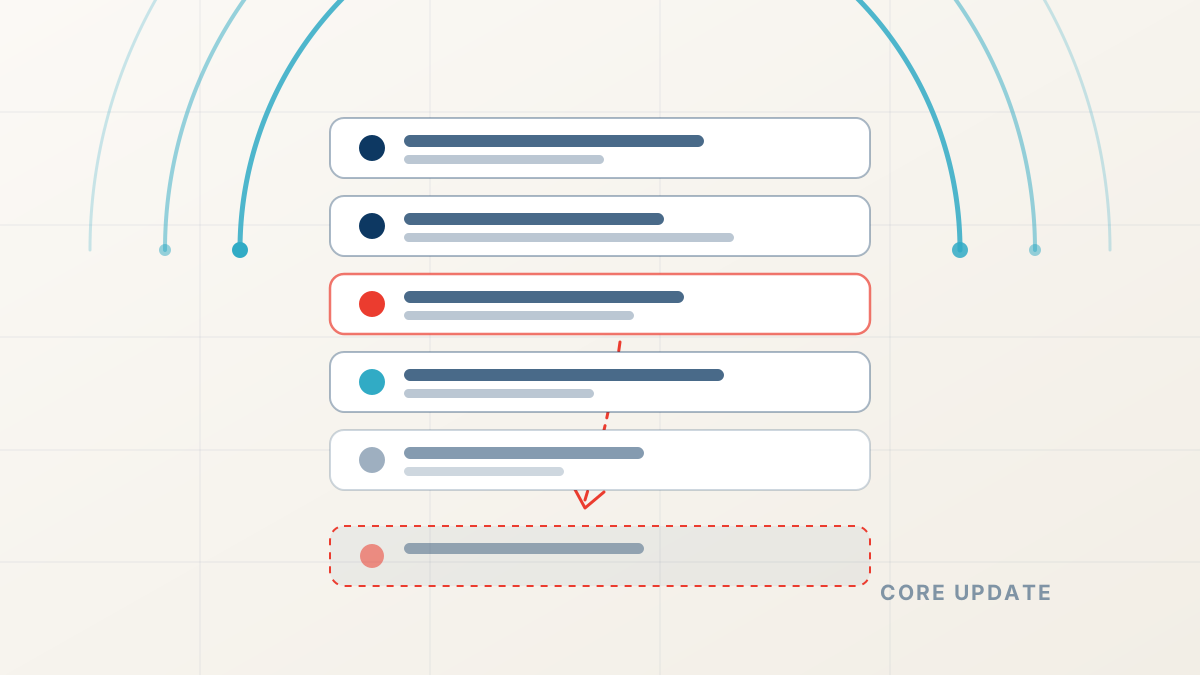
A core update is not a penalty and it does not target your domain. Google is re-tuning the systems that judge quality, relevance, and trust. Each rollout re-sorts the field for millions of queries at once. Your pages did not change. The bar they are measured against did.
That is why the drop often feels unfair: pages that held positions for years can slide after a rollout without anything breaking. The reading is relative, not personal. Google looked at your query space again and decided that competitor content now answers the intent with more depth, better evidence, or clearer expertise. Recovery means closing those specific gaps, not hunting for a technical fault that does not exist.
This reframing matters. Penalties have appeal processes; quality reviews have work. The work is auditing your content against the same questions Google's reviewers ask: Does this page show first-hand experience? Is the answer complete? Would a reader trust it enough to act on it?
“A core update does not punish your site. It re-scores the same results against a higher bar, and the sites that drop are the ones that were already closest to that bar.”
Site-wide devaluation or page-level mismatch?
The diagnosis splits into two patterns, and they need opposite responses. In a site-wide loss, most of your pages and query classes fall together — the thinner the page, the harder it fell. That pattern says Google reviewed overall quality, and the fix is a content audit across the whole site, ordered by commercial value.
In an intent mismatch, only a cluster falls: every product-adjacent blog post while your service pages hold, or every mobile query while desktop holds. The pages still fit some intents but lost the contest for one. The fix is rewriting that cluster to match the intent Google now rewards, not a site-wide overhaul.
Segment your positions by query class before you plan anything: branded versus non-branded, informational versus commercial, mobile versus desktop. Two hours of this usually tells you which of the two patterns you are in. Guessing wrong here is the most expensive mistake in update recovery, because it sends you rebuilding pages that were never the problem.
What not to do in the first 48 hours
Panic produces changes that are hard to undo and harder to measure. Every edit you make during a rollout muddies the evidence: you can no longer tell whether movement came from the update or from you. Give the rollout two clean weeks, and spend them taking notes instead of rewriting.
Do not mass-rewrite or delete pages mid-rollout
Wait until the rollout completes and rankings settle before judging any page.
Do not buy links to compensate
Purchased links during a quality reassessment add risk on top of a loss.
Do snapshot query-level positions now
A dated export of positions by query is the baseline every later comparison needs.
Do log which queries and pages moved
Clusters of movement are the map you will use to plan recovery work.
Do check for technical regressions separately
Confirm the update is the only candidate cause: recent deploys, canonical changes, or indexation drops can coexist with a rollout.
The evidence-led recovery path
Once the rollout settles and your evidence is dated, recovery becomes a normal audit. Compare the pages you lost against the pages that replaced you, using Google's own helpful content questions as the rubric. Where the gap is depth, add it. Where the gap is trust, add sources, authorship, and first-hand experience. Where the gap is intent, rewrite for what searchers actually want from that query today.
Most business owners should not run this alone, because the audit depends on reading movement patterns across hundreds of queries at once. A professional ranking drop diagnosis dates the loss, separates the patterns described above, and hands you a prioritised fix list with the evidence attached. If you want to start with self-service checks, our free SEO audit tools cover the technical layer while you assemble the timeline.
Recovery from a core update is measured in months, not days, because Google needs fresh rollouts to re-score your improved pages. That is not a reason to delay: every week without a dated baseline is a week of evidence you cannot get back.
Ranking Drop Diagnosis
Find out why your rankings dropped
FastestRank dates your traffic loss, ties it to a documented cause, and ranks the fixes — a human-reviewed diagnosis, not an automated checklist.
Sources
FastestRank Editorial
Ranking Recovery Desk
FastestRank Editorial dates and diagnoses ranking drops for business owners, separating verified causes from guesswork before any recovery work begins.
Continue Reading
Related Articles
Technical SEO
Technical SEO Errors That Remove Pages From Google
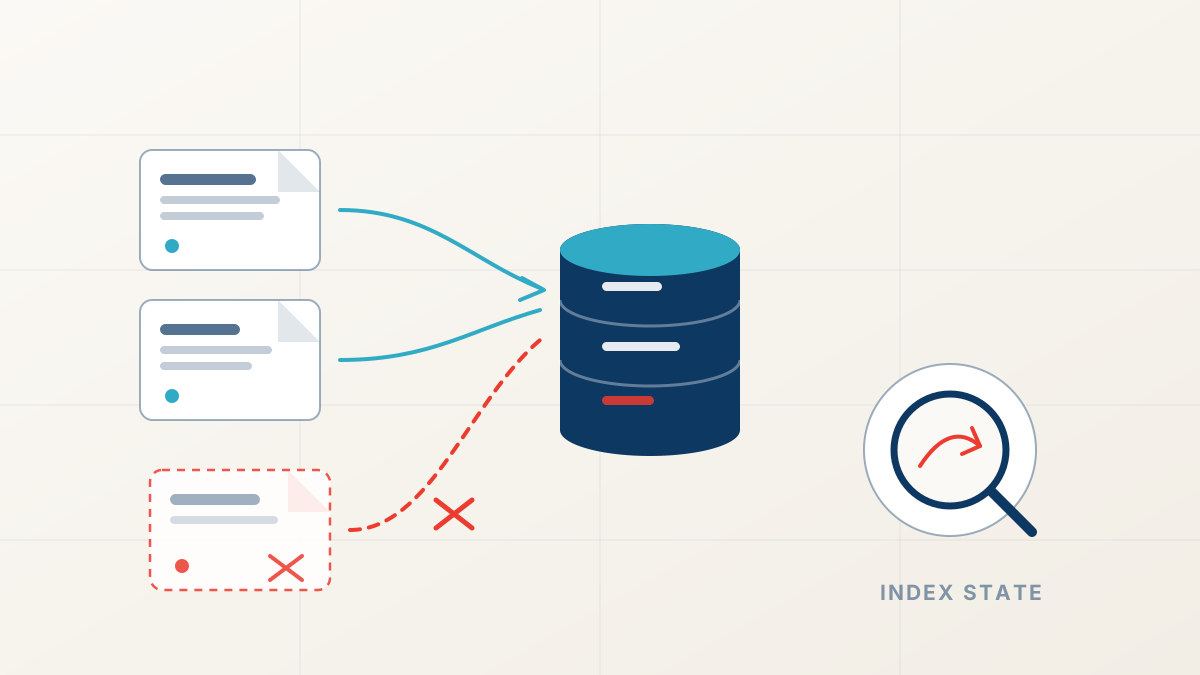
Pages keep returning 200 while quietly disappearing from search. Rogue canonicals, crawl blocks, and decaying redirect chains explain most of these silent losses.
FastestRank Editorial6 min read
Core Updates
Content Decay: Why Old Pages Stop Ranking
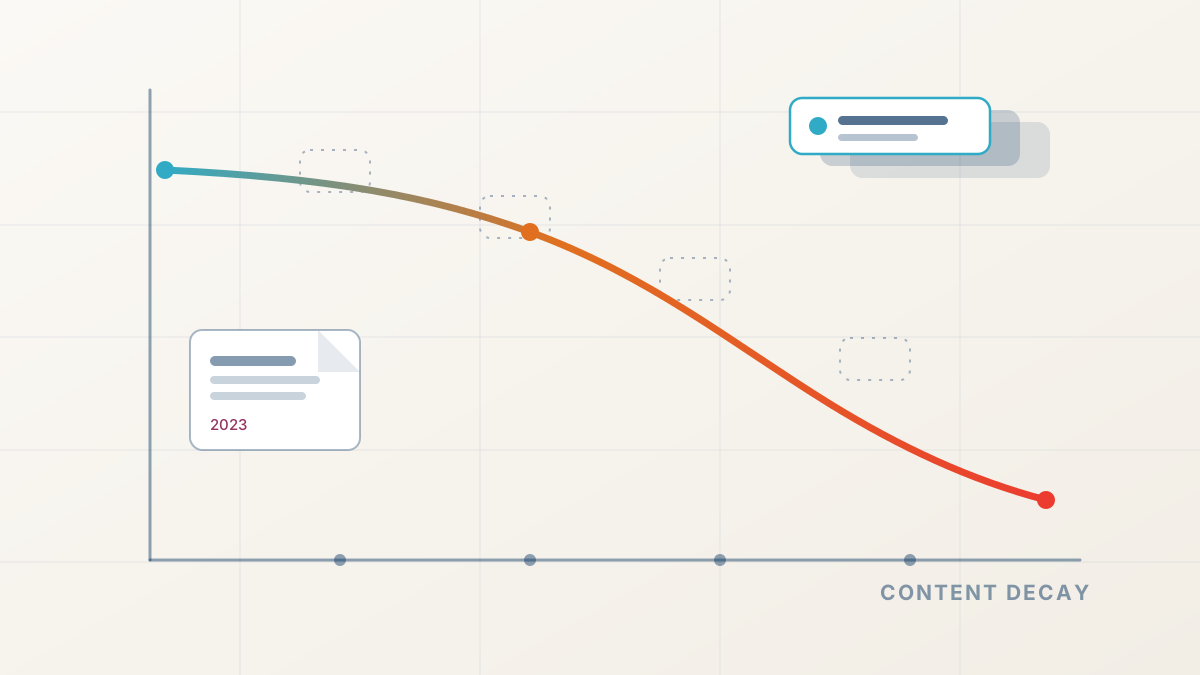
Steady pages slowly lose visibility quarter over quarter. That slope is content decay — and refreshing it takes evidence, not just a new publish date.
FastestRank Editorial6 min read

Technical SEO
The Comprehensive Guide to Modern SEO: Technical, On-Page, and Equity Foundations
A complete structural blueprint covering server infrastructure, semantic HTML, Core Web Vitals, entity-based keyword modeling, and authority acquisition.
FastestRank Editorial7 min read