
Core Updates
Content Decay: Why Old Pages Stop Ranking
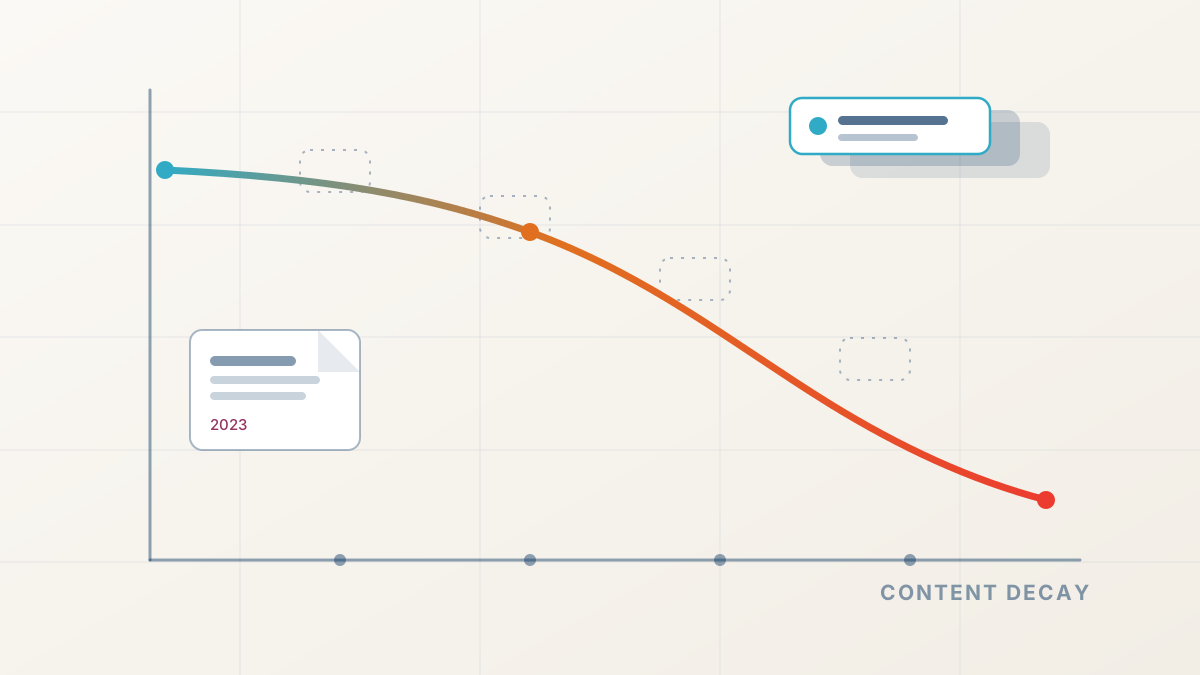
Steady pages slowly lose visibility quarter over quarter. That slope is content decay — and refreshing it takes evidence, not just a new publish date.
Key takeaways
- Content decay is a gradual slope: previously steady pages lose visibility quarter over quarter, without any single event.
- Pages decay because fresher, deeper answers arrive, search behaviour drifts, and facts age — the page did not get worse, the field got better.
- Diagnose what actually aged before rewriting: position trend, query mix, the live SERP, and the page's depth against today's intent.
- Choose refresh, consolidation, or retirement deliberately. Re-dating a page without adding substance does not survive the next reassessment.
Decay is a slope, not a cliff
Some ranking drops arrive with a date attached: an update rolled out, a site got hacked, a migration went live. Content decay is quieter. A page that held position four for two years slips to six, then eight, then off the first page. It loses a visible slice of traffic each quarter, and there is no incident to blame.
The slope itself is the clue. If your chart shows a long, gentle decline on pages that were previously stable — rather than a step drop on a known date — decay is the leading candidate. Owners often read it as "Google is pushing us down" and wait for a recovery that will not come, because nothing is going to reverse the slope on its own.
Why useful pages fall behind
Decay is relative. Your page is the same document it was; the field around it changed. Competitors published newer, deeper answers. The topic moved on and parts of your page stopped being true. Search behaviour drifted, so the query that once meant one thing now expects a different kind of result. And the results page itself changed shape, with new result types taking the clicks that used to land on classic listings.
This is why decay compounds. A page that was the best answer in 2023 is competing against two more years of publishing in 2026. Every quarter you leave it untouched, the gap grows — and the refresh that would have held the position cheaply last year becomes a rebuild this year.
Diagnose what actually aged
A refresh that rewrites the wrong weakness wastes the budget and the opportunity. Four checks, run in order, tell you what actually aged on the page before you touch a word.
Chart the position trend by quarter
Confirm the decline is gradual and page-specific, not a step change shared with the whole site — that distinction separates decay from an update loss.
Compare the query mix then and now
A page can decay for one intent while holding another. Segment the queries that fed the page over time and find which cluster moved.
Read today's live results for the money query
List what ranks now that did not rank before: format, depth, evidence, freshness. The delta between your page and the current leaders is the work list.
Audit the page against today's intent
Mark every claim that has aged, every question readers now ask that the page ignores, and every section that no longer matches what searchers want.
Refresh, consolidate, or retire
Once the diagnosis is on the table, one of three actions fits. Refresh when the intent is unchanged and depth is the gap: update facts and dates, add the sections the current leaders have earned, strengthen the evidence, and republish with a real changelog. Consolidate when several thin pages split the same intent: merge them into one strong page and redirect the rest. Retire when the page no longer deserves the query at all, and send its equity to the closest living page.
The discipline is matching the action to the diagnosis. Refreshing a page whose real problem is cannibalisation hides the problem for another quarter. Retiring a page that only needed two new sections throws away authority you already earned. And the most common shortcut — updating the publish date and a few sentences without adding substance — resets nothing, because reviews compare depth, not timestamps.
Changing dates and swapping synonyms without new substance leaves the page weaker than the field it lost to. If the audit cannot name what improved, the refresh is not ready to publish.
Rebuild relevance with evidence
Run decay audits on a schedule — quarterly for commercial pages — so refreshes happen while they are still cheap. Track the outcome the way you would track any investment: positions and traffic by query class, quarter over quarter, against the pre-refresh baseline.
If the decay is widespread rather than a few pages, or every refresh loses ground to the same competitors, get evidence before spending the content budget. A ranking drop diagnosis tells you whether you are fighting decay, an update reassessment, or competitor displacement — three problems that wear the same slow-decline costume and need different budgets.
Ranking Drop Diagnosis
Find out why your rankings dropped
FastestRank dates your traffic loss, ties it to a documented cause, and ranks the fixes — a human-reviewed diagnosis, not an automated checklist.
Sources
FastestRank Editorial
Ranking Recovery Desk
FastestRank Editorial dates and diagnoses ranking drops for business owners, separating verified causes from guesswork before any recovery work begins.
Continue Reading
Related Articles
Core Updates
Why Rankings Drop After Google Algorithm Updates
Traffic falls within days of a confirmed Google update. Here is how to date the drop, separate a site-wide loss from a page-level intent mismatch, and avoid the panicked fixes that slow recovery.
FastestRank Editorial6 min read
Market Intelligence
Competitors Outranking You: How SERP Displacement Works
Your rankings look stable while your traffic falls. When a competitor earns the result Google prefers, the fix is differentiation, not imitation.
FastestRank Editorial6 min read

Technical SEO
Mastering Featured Snippets: Structured Formatting, Tables, and Search Intent
How to reverse-engineer snippet triggers, format concise answer blocks, and optimize semantic HTML tables to capture position-zero search real estate.
FastestRank Editorial5 min read