
Backlinks & Authority
Lost Backlinks: Why Rankings Fall When Links Disappear
Links vanish when other sites restructure, and the authority they passed vanishes with them. Learn to measure link loss, reclaim what is recoverable, and replace what is not.
Key takeaways
- Backlinks disappear without notification when publishers delete, move, or retire their pages, and the authority they passed fades with them.
- The classic symptom is traffic sliding on pages that ranked for branded and commercial terms — the queries most dependent on authority.
- Measure loss by diffing two dated snapshots of your link profile, then map lost links to the pages that fell.
- Reclaim lost links by repairing targets and updating publishers before you invest in building new ones.
Backlinks disappear quietly
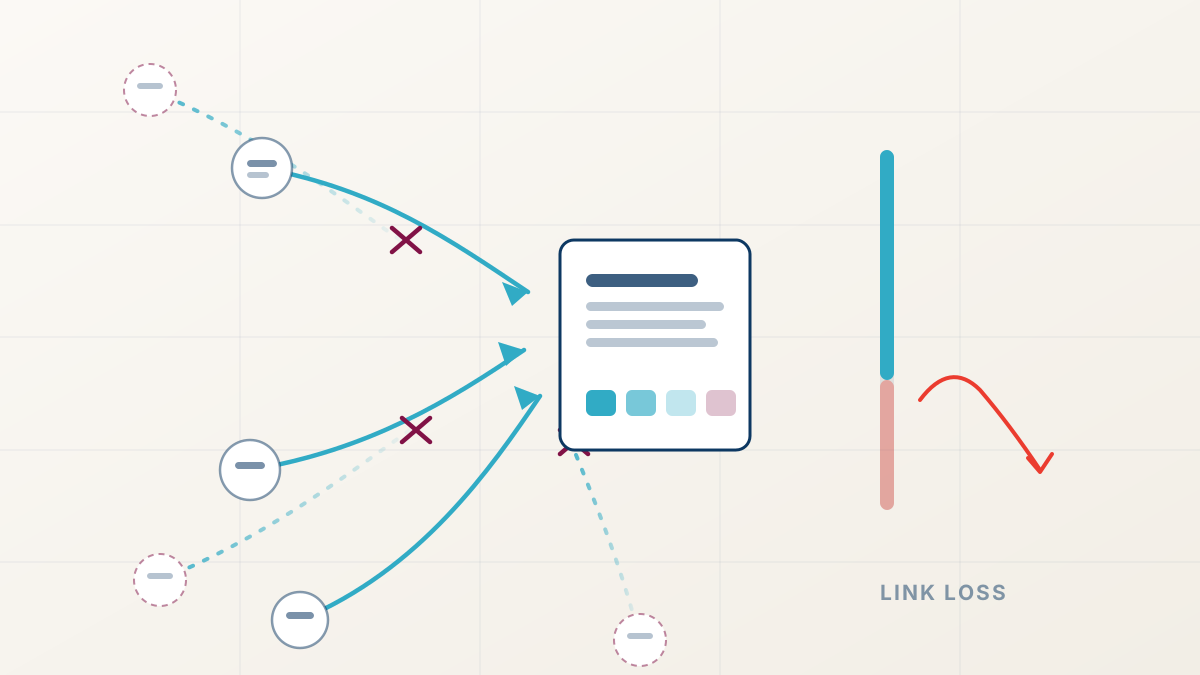
Links are the least stable asset in SEO because you do not control the other end. Publishers restructure sites and break paths. Industry directories shut down. News sites retire old sections. A partner goes out of business and takes a decade of earned citations with it. None of this generates a notification, and none of it shows up in your analytics as an event.
What you see instead is a slow fade. The authority a page relied on thins out week after week until, one quarter, it no longer holds its position. Because the loss is gradual and spread out, most owners see the traffic decline long before they connect it to the links that caused it.
Branded and commercial terms slide first
Link loss has a symptom signature. The first pages to feel it are the ones that ranked on authority rather than pure content relevance: your money pages, your brand queries, and the commercial comparisons competitors actively contest. Informational pages with a strong intent match tend to hold longer.
This signature is worth learning because it points away from other causes. Algorithm updates hit broad query classes at once. Technical faults hit templates. Link loss concentrates on the pages whose rankings leaned hardest on external votes. If your traffic fell on exactly those pages while long-tail informational posts held steady, the link profile deserves the first look.
Measure the loss before reacting
Guessing at link loss wastes outreach effort and repair budget. The measurement is simple: take two dated snapshots of your backlink profile and diff them.
Export your backlink profile for two dates
Compare the current profile against a snapshot from before the traffic decline. Any tool that tracks referring domains works, including the free ones.
Classify what disappeared
Separate editorial links (real articles), directory and listing links, and links from domains that expired. Each class returns through different repair work.
Check what happened to the linking page
A lost link is often a moved link: the article still exists at a new URL, or your target page moved and the anchor now lands on a 404.
Map lost links to dropped rankings
The strongest evidence is correlation: pages that lost referring domains and lost positions in the same window are your repair priorities.
Reclaim before you replace
Most of the time, the fastest recovery is not new link building. It is reclaiming the equity you already earned. Where the linking page still exists but your target URL moved, fix the destination with a clean redirect and the link works again. Where the publisher deleted or moved their article, send a short, specific email asking them to update the citation. They cited you once for a reason, and a good share will do it again.
Where the linking site itself expired, the link is genuinely gone, and replacement is the honest path. Replace with assets worth citing: original data, genuinely useful tools, and pages good enough that a publisher would choose them. Chasing the old link graph with volume purchases is where link loss turns into link risk.
Before any outreach, confirm every reclaimed link lands on a page that returns 200. Outreach that recovers links into a redirect chain or a 404 repairs nothing.
Timing tells you whether links were the cause
The final step is the one that turns a correlation into a diagnosis: overlay the link-loss timeline on the traffic timeline. If referring domains to your money pages started fading two months before the ranking slide, you have a coherent cause. If the two timelines do not line up, links were a bystander, and the real cause is still open — an update, a technical fault, or competitor gains.
Running this comparison across backlink data, query positions, and site history is exactly what a professional ranking drop diagnosis does, with the evidence attached to every conclusion. To start measuring the profile yourself, the free SEO audit tools include backlink checkers that can produce the dated snapshots the diff needs.
Ranking Drop Diagnosis
Find out why your rankings dropped
FastestRank dates your traffic loss, ties it to a documented cause, and ranks the fixes — a human-reviewed diagnosis, not an automated checklist.
Sources
FastestRank Editorial
Ranking Recovery Desk
FastestRank Editorial dates and diagnoses ranking drops for business owners, separating verified causes from guesswork before any recovery work begins.
Continue Reading
Related Articles

Technical SEO
Authority Backlinks in Modern Search: Evaluating Link Equity and Editorial Placement
Search engines evaluate authority through topical relevance, publisher editorial standards, and citation context rather than raw domain metrics.
FastestRank Editorial5 min read

Technical SEO
Foundational Link Building: Technical Architecture and Equity Flow
How crawl budget, site architecture, and internal equity distribution amplify the organic impact of earned inbound backlinks.
FastestRank Editorial5 min read

Technical SEO
Understanding Types of Backlinks: Attributes, Rel Values, and Crawl Equity
A clear technical guide distinguishing follow, nofollow, sponsored, and UGC link attributes, and how search engines process each signal.
FastestRank Editorial5 min read