
Market Intelligence
Competitors Outranking You: How SERP Displacement Works
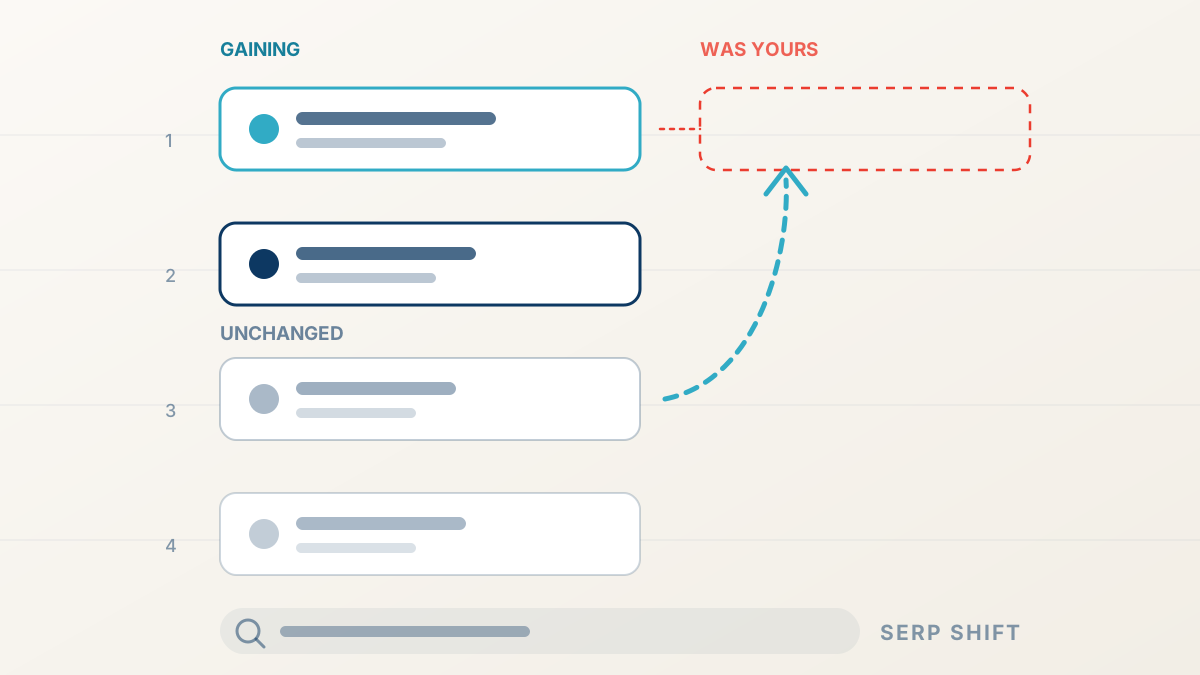
Your rankings look stable while your traffic falls. When a competitor earns the result Google prefers, the fix is differentiation, not imitation.
Key takeaways
- Displacement feels like nothing broke: your page holds its position on most queries while competitors climb past it on the money terms.
- Average position hides the damage. Segment the specific queries that carry revenue and check who ranks on them today.
- The displacing result usually wins on intent match, depth, evidence, or experience — four gaps you can verify page by page.
- Close the gap with differentiated value. Copying a competitor's page enters a race you start behind.
Your rankings are stable. The SERP moved.
This cause is the easiest to miss because every dashboard looks calm. Your page ranks for its keywords, roughly where it always did. But rankings are relative, and the results page for each query is a contest that re-runs every day. When a competitor earns the result Google prefers, your position number can drift only slightly while your traffic falls hard — the queries where you were overtaken are exactly the ones that carry revenue.
The symptom signature: rankings look stable, but competitors now appear above you for the same search terms, and the clicks that used to be yours are going to them. If your traffic is down while your average position barely moved, stop reading your dashboard and start reading the live results pages for the queries that pay your bills.
What the displacing result does better
Displacement is earned, and it is usually earned on one of four gaps. Intent match: the competitor's page answers what searchers actually want from that query today, while yours answers what that query meant two years ago. Depth: they cover the sub-questions and objections yours skips. Evidence: they show first-hand experience, data, named sources, and proof yours lacks. Experience: their page loads fast and reads cleanly on a phone, while yours fights the visitor.
None of these gaps require the competitor to be bigger or older — only more attentive more recently. That is the good news in this diagnosis: displacement by quality is reversible by quality, in a way a penalty or a lost domain never is.
Verify the displacement with a snapshot diff
Before commissioning work, verify the pattern with evidence. The mechanics are simple enough to run in an afternoon.
Save today's live results for your money queries
Screenshot or record the top ten for each revenue-carrying query — this becomes your dated baseline.
Compare against your earlier records
Old rank reports, screenshots, or Search Console history show exactly when each competitor appeared above you.
Segment the queries by intent
Displacement on commercial terms but not informational ones points at product-page quality; the reverse points at content depth.
Audit one displacing page in full
Date it, outline it, count its evidence, and test it on a phone. Name the specific gaps between it and yours.
Close the gap without copying it
The tempting response to displacement is imitation: rebuild your page to look like theirs. This inverts the problem. Their page is tuned to win yesterday's comparison, and by the time you match it, they have moved. A copy also enters the contest with none of the authority that let them win.
The durable response is differentiation with evidence: things your page has that theirs cannot claim. First-hand case results, proprietary data, real pricing, named expertise, answers to the objections their page ignores. Where their page summarises, yours should prove. Google's guidance rewards exactly this: content that shows experience and adds value beyond what already ranks.
“Copy the competitor's gaps, not their page. The list of what they do not answer is the only brief that can beat them.”
Turn SERP checks into a quarterly habit
Displacement is silent because nobody owns the SERP. Make someone own it: a quarterly snapshot diff of your revenue queries, with the displacing pages noted and dated. Caught early, a challenger is a one-page refresh. Caught late, it is a rebuild against an incumbent.
Self-service tools cover the routine check — the free SEO audit tools include rank and SERP trackers that produce the snapshots. When the diff shows a pattern across many queries rather than one challenger, get it diagnosed before budgeting the response. A ranking drop diagnosis separates competitor displacement from decay, update losses, and link erosion — without the timelines, they look the same.
Ranking Drop Diagnosis
Find out why your rankings dropped
FastestRank dates your traffic loss, ties it to a documented cause, and ranks the fixes — a human-reviewed diagnosis, not an automated checklist.
Sources
FastestRank Editorial
Ranking Recovery Desk
FastestRank Editorial dates and diagnoses ranking drops for business owners, separating verified causes from guesswork before any recovery work begins.
Continue Reading
Related Articles
Core Updates
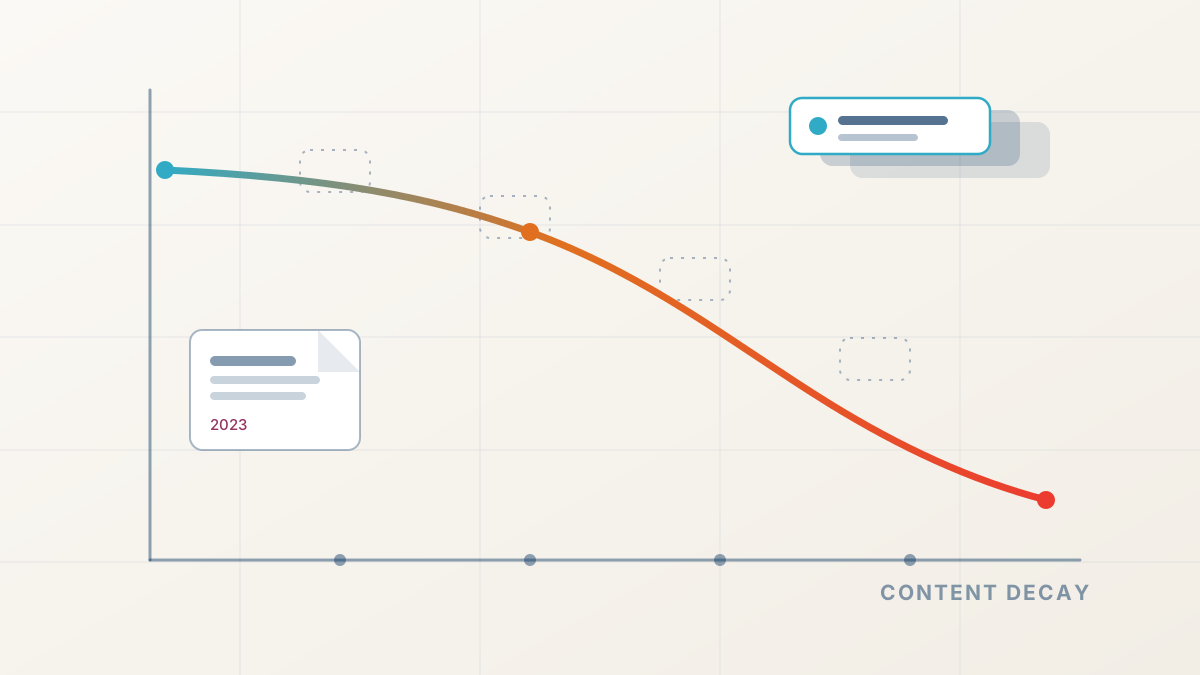
Content Decay: Why Old Pages Stop Ranking
Steady pages slowly lose visibility quarter over quarter. That slope is content decay — and refreshing it takes evidence, not just a new publish date.
FastestRank Editorial6 min read
Backlinks & Authority
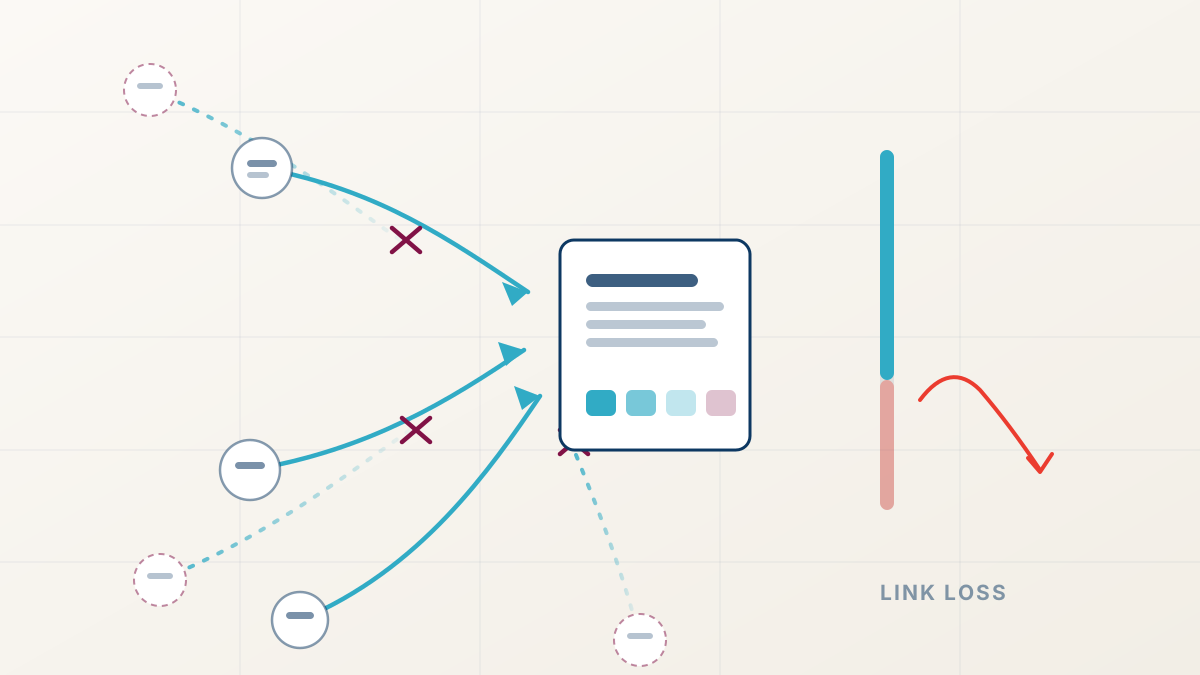
Lost Backlinks: Why Rankings Fall When Links Disappear
Links vanish when other sites restructure, and the authority they passed vanishes with them. Learn to measure link loss, reclaim what is recoverable, and replace what is not.
FastestRank Editorial6 min read

Digital Marketing
Build a Search-Visibility Baseline First
Choose a small set of important pages, check how people reach and use them, and measure the next improvement against a recorded starting point.
FastestRank Editorial3 min read